The Club at ArrowCreek Membership Drive Is Closing In On Goal!

2015-07-01 07.48.16
2015-07-01 08.10.57
2015-06-30 08.49.54
2015-06-30 08.51.52

Posted in ArrowCreek, Golf, Golf at ArrowCreek, The Club at ArrowCreek | Tagged , , , , , , | 1 Comment

PGA Show: Golfers Can Be Segmented Into Various Behavioral Segments

Golfers can be segmented into various behavioral segments and how to market to them. From The PGA Show held January 2015, here are two presentations that our ArrowCreek golfers should find very insightful.
2015-06-30 10.42.36

PGA 2015: Golf Marketing Trend Watch

Golfer Behavioral Segmentation & Consumer Insights 2015

Posted in Golf, Golf Industry | Tagged , , , , , , , , | Leave a comment

Golf’s 2020 Vision: The HSBC Report

The Future of Golf sponsored by HSBC Group (HSBC Holdings plc is a British multinational banking and financial services company headquartered in London, United Kingdom. It is the world’s third largest bank by assets.) provides a world-wide vision of golf trends going forward to 2020, as written by The Futures Company for HSBC in 2012.

Posted in Golf, Golf Industry | Tagged , , , , , | Leave a comment

What Are Your Favorite Homemade Popsicles?

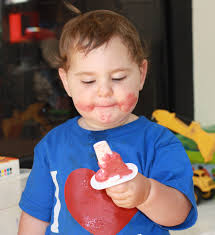
pops-rwbWith the 4th of July around the corner and memories of red, white and blue popsicles dancing in my head, I ask – what are your favorite homemade popsicles? Care to share – leave your recipe in a comment below!popschild

A few memories and recipes from Grandparents.com are here.

Posted in Recipes | Tagged , , | Leave a comment

Nationwide Participation Trends in Sports, Fitness & Outdoor Recreation Activities

This study will interest several ArrowCreek community members.

The Fairfax County (Va) Park Authority Staff presented a new report of current national recreation activity participation trends, highlighting select findings from the report in April 2015. This is the seventh report in a series extending back to 2002 that aims to periodically provide a review of participation trends in activities relevant to the Park Authority. Trends analysis is an important management tool as it provides a broader context to help interpret local participation patterns.

Periodic analysis of recreation and leisure trends is a National Recreation and Park Association CAPRA agency accreditation standard.

Report findings are based on information gleaned from the annual nationwide survey of sports, recreation and fitness activity participation conducted on behalf of the Physical Activity Council. Other sources include reports from the Sports & Fitness Industry
Association, National Golf Foundation, International Health, Racquet and Sports Club Association and Outdoor Industry Association among others.

Current trends will be discussed in the following areas:
− Sports
− Fitness
− Golf
− Outdoor recreation
− Macro activity trends

Here is the facinating 7th Report in a Continuing Series on Nationwide Participation Trends in Sports, Fitness & Outdoor Recreation Activities (April 2015) – Scroll in about 6 pages for the actual report. It is part of the on-line account of the Fairfax County Park Authority Memorandum for the meeting where it was presented.

Here is the link again for our ArrowCreek Demographic Survey Report .

Posted in ArrowCreek, Demographics, Exercise Facility, Golf Industry, Recreation Trends | Tagged , , , , , , , , , , , , , , , | Leave a comment

Outdoor Recreation Participation Topline Report 2015

The Outdoor Recreation Participation Topline Report 2015 is available from The Outdoor Foundation® annually. The report provides a snapshot of American participation in outdoor activities in 2014 with a focus on youth and young adults. The report is based on an online survey of nearly 11,000 Americans ages six and older.

Nearly half of all Americans — 48.4% — participated in at least one outdoor activity in 2014. This equates to 141.4 million participants, who went on a collective 11.8 billion outdoor outings.

Overall outdoor participation dropped .8% since 2013 and, by a small margin, reached the lowest levels since the report began in 2006. Extreme weather and an unusually cold winter are likely major contributors to the decline. While the typically popular gateway activities of running and biking lost participants in 2014, the indoor versions of these activities — running on the treadmill and using the stationary bike — added participants.* (* Data from participation in indoor activities comes from the overall Physical Activity Council’s survey, which measures various types of activity and forms the basis of this report. Since this report focuses on outdoor participation, indoor participation numbers are not included.)

Paddle sports are a bright spot in outdoor participation. Stand up paddling continued to be the top outdoor activity for growth, increasing participation by 38% from 2013 to 2014. Snow sports, such as telemarking (downhill), snowshoeing, freestyle skiing and cross-country skiing, also grew by significant margins.

During January and February of 2014 a total of 10,778 online interviews were carried out with a nationwide sample of individuals and households from the US Online Panel of over one million people operated by Synovate/IPSOS. A total of 5,067 individual and 5,711 household surveys were completed. The total panel is maintained to be representative of the US population for people ages six and older. Over sampling of ethnic groups took place to boost response from typically under responding groups.

Methodology

The 2015 participation survey sample size of 10,778 completed interviews provides a high degree of statistical accuracy. All surveys are subject to some level of standard error — that is, the degree to which the results might differ from those obtained by a complete census of every person in the US. A sport with a participation rate of five percent has a confidence interval of plus or minus 0.21 percentage points at the 95 percent confidence level. A weighting technique was used to balance the data to reflect the total US population ages six and above. The following variables were used: gender, age, income, household size, region, population density and panel join date. The total population figure used was 292,064,000 people ages six and older.

************************************
About The Outdoor Foundation

The Outdoor Foundation
419 7th Street, NW, Suite 401 | Washington, DC 20002 | 202.271.3252
http://www.outdoorfoundation.org

About The Outdoor Foundation

Founded in 2000, the Outdoor Foundation is a national not-for-profit organization dedicated to inspiring and growing future generations of outdoor leaders and enthusiasts. Through youth engagement, community grantmaking and groundbreaking research, the Foundation works with young leaders and partners to mobilize a major cultural shift that leads all Americans to the great outdoors.

About the Physical Activity Council (PAC)

The survey that forms the basis of the Topline Report is produced by the Physical Activity Council (PAC), which is a partnership of leading organizations in the US sports, fitness and leisure industries. While the overall aim of the survey is to establish levels of activity and identify key trends in sports, fitness and recreation participation, each partner produces detailed reports on their specific areas of interest. Partners include: the Outdoor Foundation (OF); National Golf Foundation (NGF); Snowsports Industries America (SIA); Tennis Industry Association (TIA); United States Tennis Association (USTA); International Health, Racquet and Sportsclub Association (IHRSA); and Sporting Goods Manufacturers Association (SGMA).

Here is the report: Outdoor Recreation Participation Topline Report 2015

Posted in Outdoor Recreational Activity | Tagged , , , , , , , , , , , , , , , , , , , , , | Leave a comment

How A Declining Middle Class Is Killing Golf

In Forbes magazine, Bob Cook shares How A Declining Middle Class Is Killing Golf

Bob Cook: A youth sports blog writer who has contributed to NBCSports.com (or MSNBC.com). He’s delivered sports commentaries for All Things Considered. For three years he wrote the weekly “Kick Out the Sports!” column for Flak Magazine. Most importantly for this particular blog above, Bob is a father of four who is in the throes of being a sports parent, a youth coach and a youth sports economy stimulator in an inner-ring suburb of Chicago. He reserves the right to change names to protect the innocent and the extremely, extremely guilty. 

Posted in Golf | Tagged , , , , , , | Leave a comment

Footgolf: How the Soccer Ball Could Save the Golf Course

Look out Frisbee Disk Golf! Here comes FootGolf! Here is an interesting article about how the soccer ball could save the golf course by Alastair Bland for smithsonian.com on June 25, 2015.

On a foggy gray morning in San Francisco, J. Ramon Estevez squats on his hams on the grass, brown and scruffy from years of drought. He squints, lining up a putt on the Gleneagles Golf Course, and in a moment, he stands, backs up a step and takes his best shot. He kicks, and a soccer ball rolls across the grass and drops into hole number 1.

Estevez and game partner Tighe O’Sullivan are just beginning a round of footgolf, a novel fusion between one of the world’s simplest ball games and one of its most exclusive. The game, just several years old, combines the etiquette, rules and rolling hills of golf with the ball and the basic footwork of soccer.

“It’s 99 percent golf, minus the equipment,” says O’Sullivan, who has been playing soccer since early grade school and played his first round of footgolf in October, 2012, about the time he and Estevez cofounded the California FootGolf Association.

Read more here.

Posted in Obscure Sports | Tagged , , , , , , , , , | Leave a comment

Next ArrowCreek Garden Club Meeting July 1, 2015

July_GC

Print/See flyer here

More info about the ArrowCreek Garden Club is here.

Posted in ArrowCreek Garden Club | Tagged , , , | Leave a comment

The Built Environment, Land Use, Health and Golf Courses

As the world becomes increasingly urbanized, the built environment—in terms of what is built, where it is built, and how it is built—is having a critical impact on the physical and emotional well-being of residents and workers, according to Richard Jackson, professor and chair of environmental health sciences at the University of California at Los Angeles Fielding School of Public Health… Read more at Linking the Built Environment to Better Health

Golf clubs going back to nature to be greener

Beyond birdies – enhancing biodiversity on urban golf courses

Golf Industry Executive David Hueber earned his Doctorate (in 2012) with breakthrough research on sustainable golf course development. David Hueber, a “nontraditional” doctoral student stepped outside of the golf industry for four years and was awarded his doctorate at the 2012 summer graduation services. He has served as a senior executive in the golf industry for over 25 years as the vice president of Marketing at the PGA Tour, president and CEO of the National Golf Foundation, the Ben Hogan Company and Ben Hogan Properties (owner of the Pebble Beach Company).

Hueber was awarded a Ph.D. in Planning, Design and the Built Environment from Clemson University. “The research focus for my dissertation, ‘The Changing Face of the Game and Golf’s Built Environment,’ was sustainable golf course and golf community development,” said Hueber. “The gist of my research is that the golf courses built or renovated during the 1990s were more costly, difficult and take longer to play than the golf courses built during the 1920s and 1960s, which may have contributed to the decline in golf participation and rounds played;” Hueber continued, “Consequently, the golf industry has inherited a large number of unsustainable golf courses that are not environmentally sensitive, economically viable and socially responsible. This suggests that we are offering a golf course product that our customers don’t want to buy.”

Dr. Elaine Worzala, who chaired Hueber’s dissertation committee and in 2010 co-authored a paper published in The Journal of Sustainable Real Estate published by the American Real Estate Society, “Code Blue for Golf Course Real Estate Development: Code Green for Sustainable Golf Course Development,” commented that Hueber’s research is of great importance to the golf course and related real estate businesses in contending with the current challenges confronting the golf industry. “A paradigm change in an industry is often overlooked, and irreparable damage can occur if the critical issues are not addressed proactively,” Worzala noted, “So, groundbreaking research such as this that clearly shows the product has shifted to something the consumer does not want can enable an industry to chart a new course to fix the problems, as opposed to letting the confounding winds of change determine golf’s future direction and destiny.”

On April 2, 2012, the Richard H. Pennell Center for Real Estate Development and the Arthur M. Spiro Institute for Entrepreneurial Leadership sponsored the first “Golf S.O.S. Symposium on Sustainability” to discuss the issues confronting the future growth and vitality of the game, the golf industry and related master planned communities with golf as the central amenity. Dr. Joe Beditz, president and CEO of the National Golf Foundation, and Bobby Weed, president and CEO of Weed Design, kicked off the event as the keynote speakers; and, John Reed, CEO of Reed Development and Dr. “Buddy” Thompson, a physician and developer of the Reserve at Lake Keowee rounded out the expert panel discussion on the challenges and opportunities in golf course community development.

Dr. Worzala, Director of the Pennell Center for Real Estate Development, was particularly intrigued with Bobby Weed’s entrepreneurial approach in his presentation, “Repurposing for Sustainable Golf Course Development,” which focused on the innovative redevelopment of golf communities that were running out of options. “What I found most interesting was Bobby Weed’s ability to take a project and orchestrate relatively simple changes that allow the owners to redevelop and remarket a golf community, and overcome what seems like major obstacles by engaging the community and turning them into partners in the redevelopment process.”

The symposium concluded with Dr. Worzala presenting Bobby Weed with the first David Hueber Golf Community Sustainability Award. Throughout his professional career and later in his doctoral research, David Hueber has opened the eyes of the industry, and this new “Game Changer” award will annually recognize leadership and innovation in the principles and practice of sustainable golf course development and operations.


Now come back to 2015:

“The idea of building residential developments in the United States around golf courses is being rethought as demand for golf facilities continues to fade. The National Golf Foundation (NGF) reports that 2013 was the eighth-consecutive year that golf course closures outpaced openings, with 158 closures and 14 openings. Ninety-six percent of those closures were public courses.

The foundation also reports that there had been an estimated drop of 600,000 golfers compared with the year before, reflecting a continuing decline in golfing since 2006. The total decline in golfers since 2006 has been roughly 4 million. Following a 40 percent growth in golf in the United States from 1986 through 2005, a period when more than 4,500 courses opened, 643 18-hole courses have closed since 2006, according to the NGF.”

Read more here: Golf: No Longer a Hole in One

Posted in Golf | Tagged , , , , , , | Leave a comment